Trap Beckham Lit Up Wilmington While Philly Kept Its Ear to the Underground
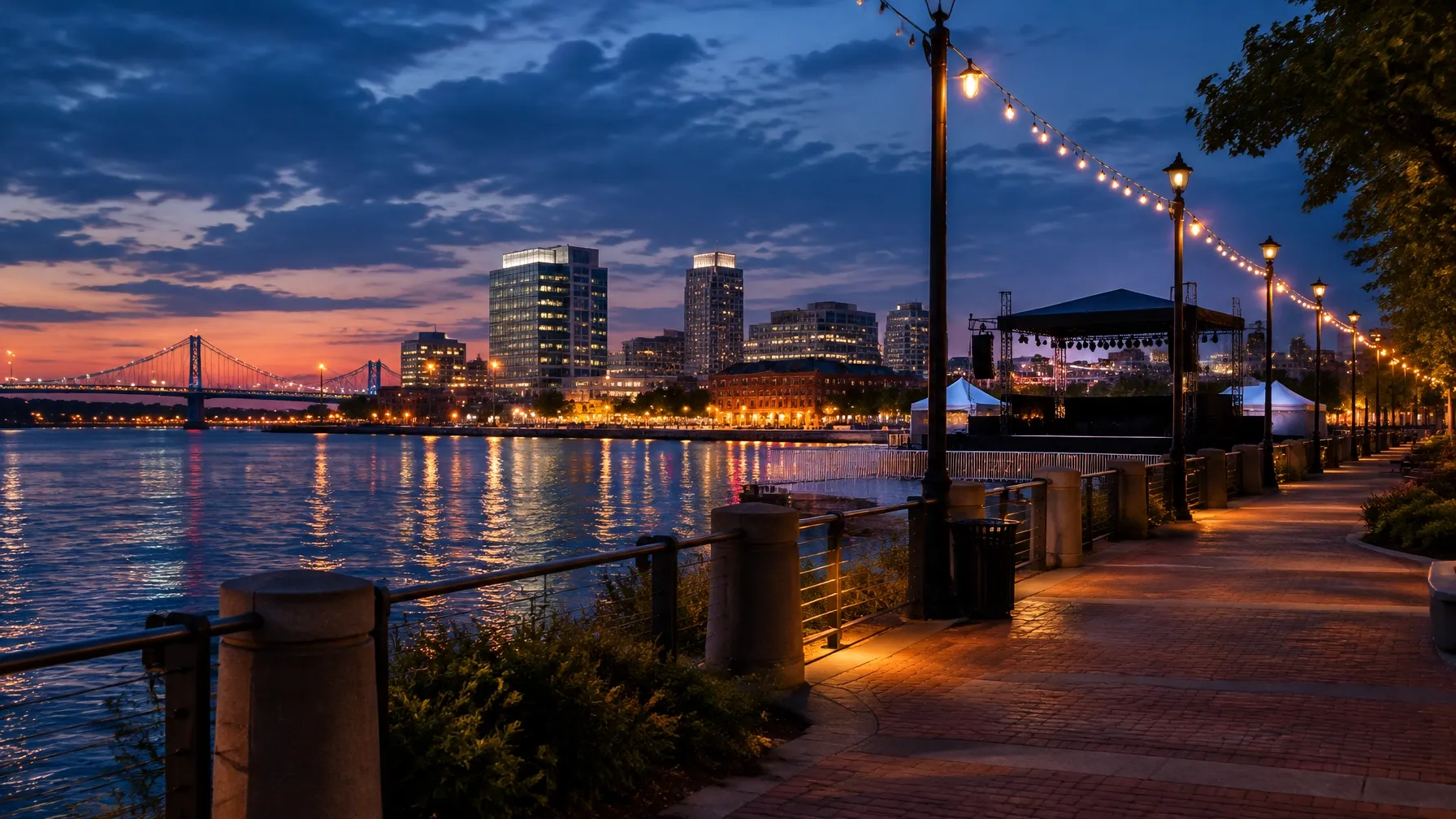
An illustrative image, not a photograph of the October event.
October’s music calendar connected Wilmington and Philadelphia through intimate rap shows, cultural programming and a headline-making waterfront party. Across the month, the region offered a reminder that the Tri-State scene is more than a string of separate local calendars: artists, venues, audiences and music-business questions move across city and state lines.
This recap brings together five October stories, following a social video recap from Power JDM The Beat. The events happened in different rooms and settings, but each gives a view of how hip-hop is performed, documented and discussed across the region.
1. Kung Fu Necktie Show Week Put Underground Rap in Focus
Philadelphia’s Kung Fu Necktie hosted a bill featuring RAV, Teller Bank$ and Fatboi Sharif during an early-October run of shows. The venue listing placed the artists together on the same night, offering a snapshot of independent rap that spans different sounds and regional backgrounds.
The show was part of RAV’s October tour schedule, with the Philadelphia date at Kung Fu Necktie on October 8. For a venue that regularly features emerging and underground hip-hop, a bill like this puts the focus on discovery: listeners can encounter artists working outside the most visible mainstream circuits, often in a room where the audience is close to the stage.
The appeal of these smaller shows is not only the lineup. Intimate rooms can make contrasts between performers, and the reactions they draw, easier to hear. In a city with a long history of rap, bills built around independent acts keep newer and less conventional sounds in the local conversation.
See the Kung Fu Necktie listing and RAV’s tour schedule.
Illustrative street scene, not a photograph of the venue or show.
Radio segment cue-5 to 7 minutes: Discuss how small rooms support underground rap discovery. Compare what audiences might notice at a multi-artist bill versus a large concert, and ask what makes a local show memorable beyond the headliner.
2. Mad Skillz Brought Live-Band Hip-Hop to City Winery
Mad Skillz performed with a live band at City Winery Philadelphia on October 9. The venue billed the evening as “A Night of Hip Hop & Spoken Word,” describing it as an intimate performance centered on hip-hop, storytelling and spoken word.
A live-band arrangement can change how a rapper’s writing lands. The musicians can shape the pace and dynamics around the vocal, while a close room makes details in delivery and phrasing more immediate. For an artist known for precise delivery and storytelling, that setting offers a different kind of listening experience from a performance built around recorded tracks and a large stage.
The appearance also showed how Philadelphia’s venue mix can bring established artists into a more personal format. City Winery’s Main Stage gave the show a room-scale setting rather than an arena backdrop. These are reported appearance details, based on the venue’s event listing.
Read the City Winery event listing.
Illustrative stage image, not a photograph of Mad Skillz or the performance.
Radio segment cue-5 to 8 minutes: Explore what changes when rap is performed with a live band. Talk about rhythm, vocal delivery and storytelling, then compare the atmosphere of an intimate venue with a larger concert setting.
3. Delaware Art Museum Framed Hip-Hop as Culture and History
On October 17, the Delaware Art Museum hosted its fourth annual Hip Hop Cultural Summit: Art as Activism. The museum described the free, all-ages event as a celebration of hip-hop’s five elements and their connections to creative expression, activism and social change.
The program placed hip-hop’s five decades of cultural history inside a museum setting, where performance and community conversation meet exhibition and preservation. The museum’s listing featured programming on graffiti, DJing, dance, MCing and knowledge, alongside panels and community activities. It also highlighted the companion exhibition Walls of Resistance: Art as Activism.
That setting raises a larger question for the Tri-State: how should a culture rooted in communities, public spaces and live practice be documented and taught? Museums can preserve objects and histories, but a summit also makes room for people to share knowledge directly. In Delaware, the event connected local audiences with artists and cultural figures while treating hip-hop as both a living practice and a subject of study.
Details are available through the Delaware Art Museum’s summit page.
Illustrative gallery image, not a photograph of the summit or its exhibition.
Radio segment cue-5 to 8 minutes: Discuss what it means to present hip-hop in a museum. Which elements of the culture are easiest to preserve, and which depend on live participation and community knowledge?
4. Phonorecords V and AI Music Cases Keep Rights Questions Moving
October’s music-business headlines included two separate legal developments: the continuing Phonorecords V rate proceeding and a growing set of lawsuits over AI music. Both matter to artists, but they involve different claims and different rights.
Phonorecords V concerns rates and terms for making and distributing phonorecords under the Section 115 statutory license for 2028–2032. In practical terms, the proceeding addresses mechanical royalties connected to the underlying musical composition. The song’s music and lyrics. Its rate outcome affects songwriters and publishers. The Copyright Royalty Board’s published materials describe a proposed partial settlement, not a final comprehensive rate decision. Follow the Federal Register notice and case docket for official updates.
One important distinction for artists: SoundExchange generally handles eligible digital performance royalties for sound recordings, such as certain non-interactive digital audio transmissions. Those are different from Section 115 mechanical royalties for the underlying composition. SoundExchange explains its role in its digital performance royalty overview.
Separately, Reservoir Media filed lawsuits against Suno and Anthropic in October, according to Digital Music News’ court coverage. The complaints allege unauthorized use of protected music in AI training and raise claims involving generated outputs and related uses. Those are allegations, not findings that the defendants infringed copyrights. The cases remain in progress; none of the matters discussed here is final, and appeals may follow as litigation proceeds.
Radio segment cue-7 to 10 minutes: Explain the difference between composition royalties and sound-recording royalties. Then summarize what Phonorecords V addresses and how the AI suits are framed as allegations, not settled outcomes. Keep the focus on what artists and rights holders should watch in the public filings.
5. Trap Beckham Headlined Wilmington’s Libra Bash
On October 11, Trap Beckham headlined the Libra Bash Day Party at Docklands Riverfront in Wilmington. The event listing places the party at the waterfront venue, while Power JDM The Beat’s earlier event coverage reported that the station broadcast live from the event, hosted by Big Dram.
That on-site broadcast links the live-scene coverage in this recap with the business headlines in the previous section. A station covering a Delaware party can also follow the rights questions shaping how music is made, licensed and paid for. Both are part of the same ecosystem: music is experienced by audiences, performed by artists and supported by a network of venues, media and rights systems.
Trap Beckham later appeared on Drams Spot, extending the event’s coverage into a follow-up conversation. The Eventbrite listing confirms the October 11 date and Docklands Riverfront location.
Radio segment cue-5 to 7 minutes: Talk about what a live broadcast can capture that an event listing cannot: the setting, crowd energy and local context. Use the Wilmington appearance to discuss how regional events connect artists, listeners and media coverage.
Why Delaware and Philly Read as One Market
The October calendar crossed state lines but shared an audience. Philadelphia’s independent rooms, Wilmington’s waterfront events and Delaware’s cultural institutions each offered different ways to encounter hip-hop. Artists and listeners move between them, making the regional scene feel connected even when each event has its own identity.
What Live Events Teach About the Business
Shows and cultural programs reveal how music reaches people in real settings, from the close attention of an intimate venue to the broad participation of a public summit. They also sit alongside the less visible systems behind music: publishing, royalty rules and disputes over how recordings may be used. For artists, understanding both the performance side and the rights side helps make the industry easier to follow.
How the Station Connects the Scene and the Headlines
Power JDM The Beat’s live presence at the Libra Bash placed the station inside a local event, while its coverage of music-business developments follows the questions affecting artists beyond the stage. Together, those roles connect regional culture with the wider industry stories shaping how music is created, heard and credited.